Step Count
You can use your watch to keep track of your step count while walking, engaging in your normal daily activities, etc.
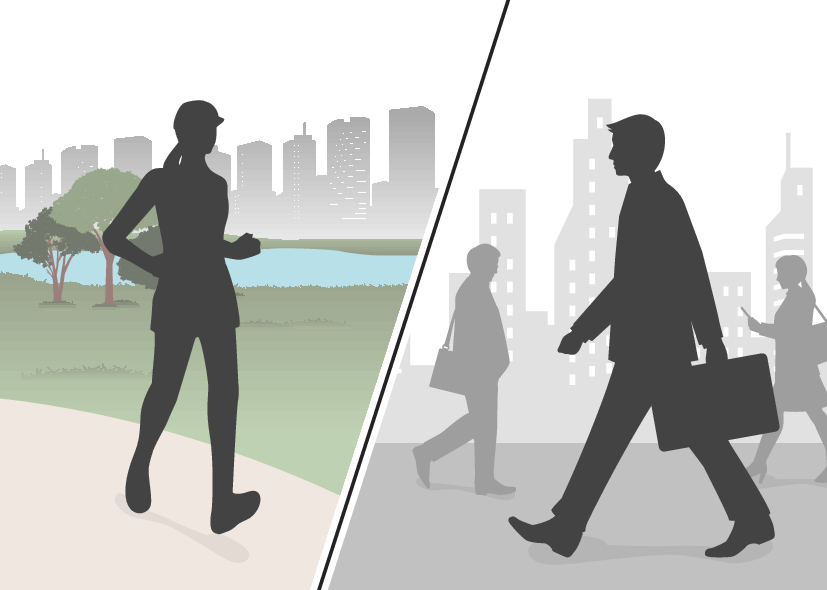
Counting Steps
If you are wearing the watch correctly, the watch will count your steps as you walk or engage in your normal daily activities.
Important!
Since this watch is a wrist-worn device, it may detect non-step movements and count them as steps. Also, abnormal arm movements while walking may cause a miss count of steps.
Getting Ready
To enable the most accurate step count, wear the watch with the face on the outside of your wrist and tighten the band securely. A loose band may make it impossible to obtain correct measurement.
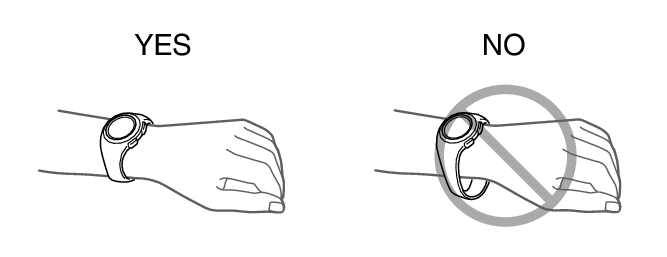
Performing Measurement
The pedometer will start counting your steps when you start walking.
To check the step count
Displaying the step count screen.
Note
The step count can show a value up to 999,999 steps. If the step count exceeds 999,999, the maximum value (999,999) remains on the display.
To prevent miscounts, the displayed count does not increase for about 10 seconds after you start walking. After you have been walking for about 10 seconds, the correct count appears, including the steps you took during the previous 10 seconds.
The step count is reset to zero at midnight each day.
To save power, step counting stops automatically if you take off the watch (no detectable watch movement) and you do not perform any operation for two or three minutes.
Causes of Incorrect Step Count
Any of the conditions below may make proper counting impossible.
Walking while wearing slippers, sandals, or other footwear that encourages a shuffling gait
Walking on tile, carpeting, snow, or other surface that causes a shuffling gait
Irregular walking (in a crowded location, in a line where walking stops and starts at short intervals, etc.)
Extremely slow walking or extremely fast running
Pushing a shopping cart or baby stroller
In a location where there is a lot of vibration, or riding on a bicycle or in a vehicle
Frequent movement of the hand or arm (clapping, fanning movement, etc.)
Walking while holding hands, walking with a cane or stick, or engaging in any other movement in which your hand and leg movements are not coordinated with each other
Normal daily non-walking activities (cleaning, etc.)
Wearing the watch on your dominant hand
Walking for 10 seconds or less